How Fire Hydrant Flow Tests Support Sprinkler System Design in Newark, NJ (Expert Guide)
Fire hydrant flow tests in Newark, NJ, are a critical first step in designing a sprinkler system that works when a fire breaks out. This article explains how GPM and PSI data feed into NFPA 13 sprinkler calculations, why Newark's water infrastructure makes these tests especially important, and when building owners need to retest before a renovation.
What Does a Hydrant Flow Test Actually Measure?
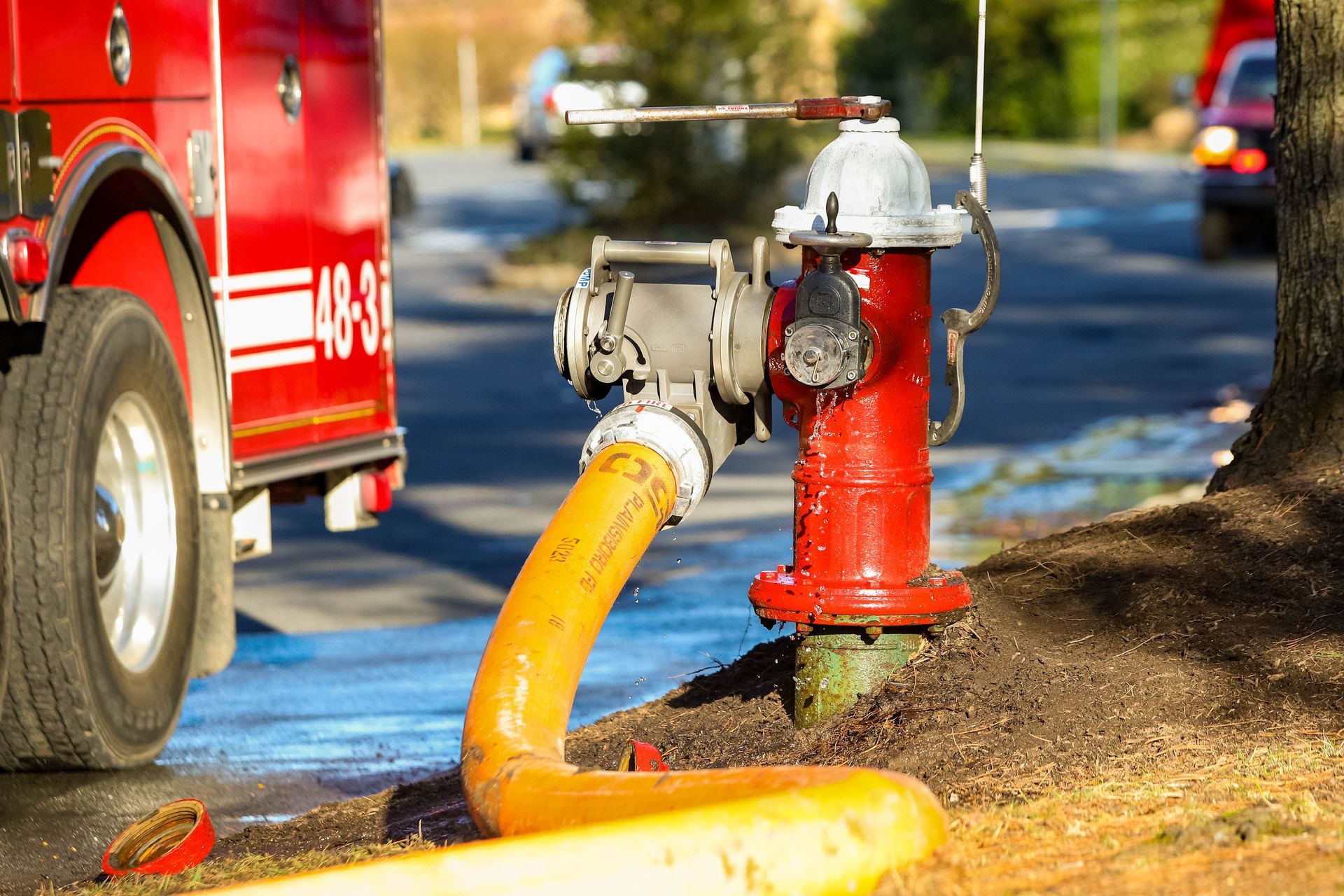
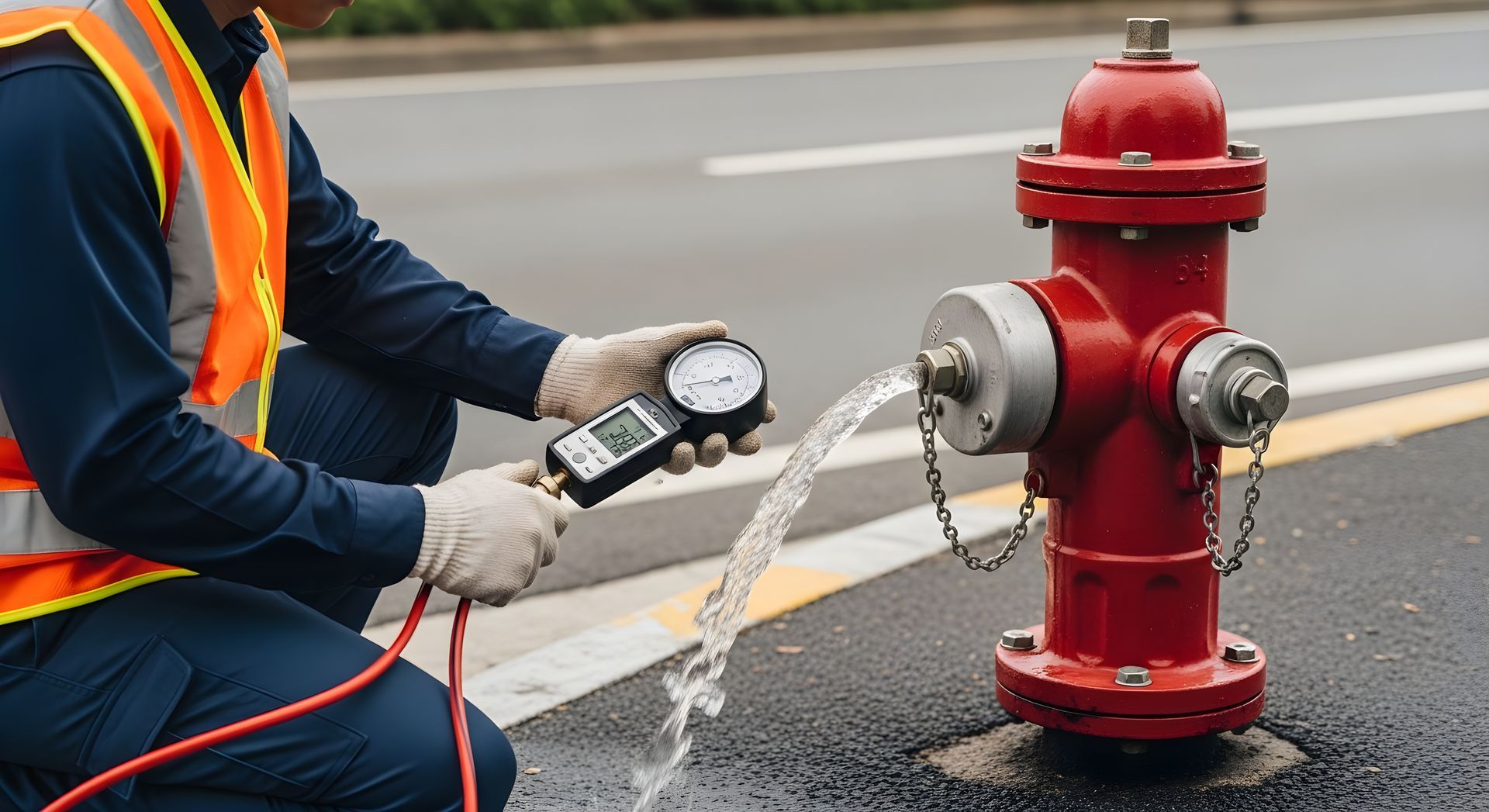
A flow test captures two essential numbers: how much water is available and at what pressure. Technicians use a pitot gauge on one hydrant to record gallons per minute (GPM) flowing, while a gauge on a nearby reference hydrant records residual pressure in pounds per square inch (PSI). Static pressure, recorded before the flow hydrant opens, gives a baseline of the system at rest.
These readings together form a water supply curve, which is the foundation engineers use to determine whether the municipal supply can support the sprinkler demand for a specific building.
How Do Engineers Use Flow Test Data for NFPA 13 Sprinkler Design?
NFPA 13 requires that the volume and pressure of a public water supply be determined from flow test data before a sprinkler system can be properly engineered. Here is the basic process:
- The flow test data produces a water supply curve plotting available pressure against flow volume.
- The sprinkler system's hydraulic demand, calculated using the building's occupancy hazard classification and area of operation, is plotted as a demand point on the same graph.
- If the demand point falls below the supply curve, the water supply is adequate.
- If it exceeds the supply, engineers must redesign the system, specify larger pipe, or recommend a fire pump.
The gap between static and residual pressure matters significantly. A large drop signals aging or undersized infrastructure that may not reliably support a new sprinkler system.
Why Newark, NJ, Water Supply Conditions Matter for Sprinkler Design
Newark has one of the oldest urban water distribution networks in New Jersey. Infrastructure varies significantly by neighborhood. In dense areas like the Ironbound, the Central Ward, or the North Ward, water mains range from relatively modern to decades-old cast iron pipe. Older mains may carry lower residual pressure and reduced flow capacity than current standards assume.
This is why hydrant flow tests in Newark, NJ, cannot be skipped or substituted with generic regional data. Pressure on one block may differ meaningfully from pressure two blocks away depending on main age, diameter, proximity to a water tower, and demand from other users. The city has also been actively replacing aged infrastructure, which can shift baseline pressure readings and make older test data unreliable faster than in more stable systems.
For commercial construction, warehouse conversions near the Passaic River, or large multi-family projects in University Heights or the Lower Broadway corridor, engineers need current, site-specific data. Relying on old test records can produce a sprinkler design that appears code-compliant on paper but underperforms in a real fire event.
When Should a Property Owner Retest Before a Renovation?
A flow test is not a one-time event. A new test is commonly required when:
- The building's occupancy classification is changing, such as converting a warehouse to mixed-use residential.
- More than five years have passed since the last flow test.
- The building footprint is expanding or the fire protection hazard level is increasing.
- Nearby municipal infrastructure work, such as new mains or pressure zone changes, has occurred since the last test.
- The original sprinkler system was installed before significant building changes.
In Newark, the combination of active infrastructure upgrades and dense development activity means retesting is frequently warranted. Submitting outdated flow test data to the local authority having jurisdiction (AHJ) can delay permits and trigger costly redesign.
What Is the Difference Between Static and Residual Pressure in a Flow Test?
Static pressure is measured at a hydrant when no water is being discharged nearby, representing the baseline main pressure. Residual pressure is recorded at a reference hydrant while a measured volume flows from an adjacent hydrant. Engineers use residual pressure when plotting sprinkler demand against available supply because it reflects real-world conditions during a fire event.
How Often Should Hydrant Flow Tests Be Performed in Newark, NJ?
Annual hydrant capacity test are widely recommended to verify that performance has not changed since the last inspection. Properties in high-risk occupancy categories or near active infrastructure construction may benefit from more frequent retesting. Scheduling tests on a consistent cycle is one of the most reliable ways to stay ahead of infrastructure changes that could affect your sprinkler system design.
Can a Building Owner Use a Neighbor's Flow Test Data for Their Sprinkler Design?
Using another property's flow test results is generally not accepted by fire code authorities. Even on the same block, water pressure and flow can vary based on main size, pipe age, elevation, and connection proximity. A licensed fire protection company must conduct site-specific hydrant capacity test at or immediately adjacent to the property being served for the data to be valid for NFPA 13 hydraulic calculations.
Get Expert Support for Your Newark Fire Protection Project
Accurate flow test data directly determines pipe sizing, pump requirements, and whether a proposed sprinkler layout can meet code. It protects your investment and, more importantly, the people inside your building.
Allstate Fire Technologies in Newark, New Jersey has provided licensed fire protection services across Newark and the surrounding region since 1990. Whether you are planning new construction, a renovation, or need to verify compliance for an existing system, the team can deliver reliable flow test data and a properly designed sprinkler system.
To schedule
hydrant flow tests in Newark, NJ or discuss your sprinkler design project,
contact the team today or call
(973) 353-0011.